Which Programming Languages Review PRs Fastest? We Measured
Median time to first review, merge rates, and first-timer success across 100 top-ranked GitHub repos. Python maintainers respond in 26 minutes; Kotlin takes 13 hours. Real C-Rank telemetry from GetMerged.
Everyone has an opinion about which open-source communities are the friendliest. Almost nobody has actually measured it.
Star counts tell you what is popular. They say nothing about whether a maintainer will look at your pull request this afternoon or next quarter.
So we measured it.
GetMerged continuously benchmarks public GitHub repositories using our C-Rank™ telemetry engine. We track external PR merge rates, time to first response, and first-timer success rates.
This analysis covers the 100 top-ranked repositories in our index as of the 2026-08-23 snapshot.
Key Takeaways
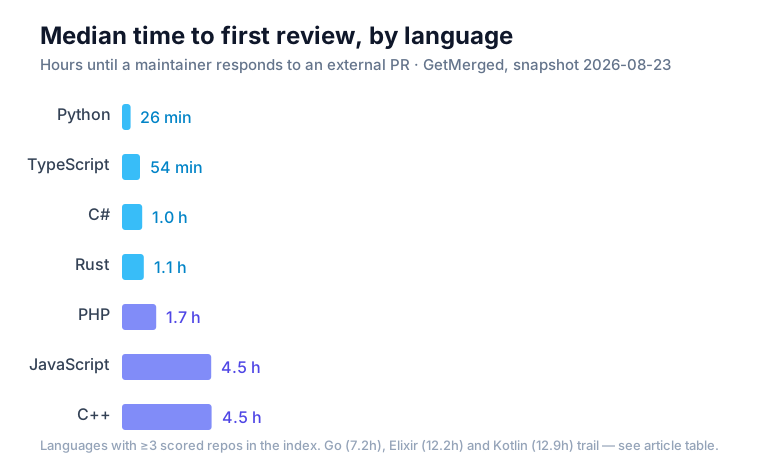
- Python is the fastest language to get reviewed: median time to first response is 0.43 hours (about 26 minutes) across top-ranked Python repos.
- Go repos are welcoming but slow: near-perfect merge rates (97.9%), yet a median first response of 7.25 hours.
- Rust merges almost everything (96.1%) but is tough on newcomers: only 85% of newcomer PRs land, versus 98% to 100% elsewhere.
- Across all 100 top-ranked repos, the average external merge rate is 97.2%: picking a healthy repo matters far more than picking a famous language.
- Browse the live per-repo breakdown on GetMerged.
The headline finding: Python reviews in under half an hour
Across the 24 scored Python repositories in our top-100 index, the median external pull request receives its first maintainer response in 0.43 hours (about 26 minutes) (GetMerged telemetry, retrieved 2026-08-23).
TypeScript follows at roughly 54 minutes, with Rust and C# close behind at around an hour.
Our finding: At the other end of the table, Kotlin and Elixir repos take a median of ~13 hours to respond, and Go sits in between at 7.25 hours. Fast review and high merge rates are correlated but not identical. Some of the most generous ecosystems are also the slowest inboxes.
For a first-time contributor, this number compounds everything else.
A fast first response tells you a maintainer is actively tending the project. That predicts faster iteration on your patch, quicker CI feedback, and a much higher chance of getting merged before your enthusiasm runs out.
Merge rates vs first-timer success: not the same thing
A repository can merge 96% of external PRs and still be a tough place for a beginner.
That is exactly what we see in Rust. Top-ranked Rust repos merge nearly everything, but only 85% of first-timer pull requests succeed, compared to 98% to 100% for Python, TypeScript, Go, and Kotlin in the same snapshot.
Our finding: The likely reason is codebase complexity rather than hostility. Rust projects demand deeper architectural familiarity per patch. Newcomer contributions more often stall in review rounds even when maintainers are responsive.
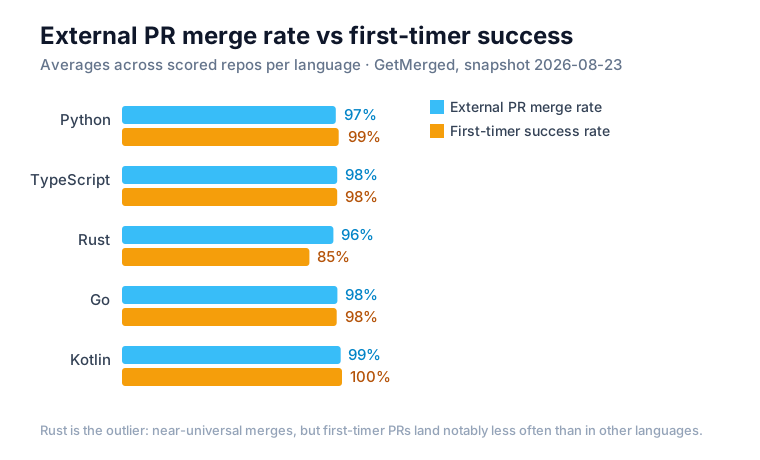
If you are choosing where to make your first ever open-source contribution, optimize for first-timer success, not raw merge rate.
Our earlier guide on finding good first issues that actually get merged walks through that workflow step by step.
The full numbers, language by language
All figures below are medians or means over scored repositories with at least 3 entries per language in the top-100 index (GetMerged, retrieved 2026-08-23):
| Language | Repos | Median first response | Avg merge rate | Avg first-timer success |
|---|---|---|---|---|
| Python | 24 | 0.43 h | 97.2% | 98.5% |
| TypeScript | 14 | 0.90 h | 97.8% | 97.8% |
| C# | 4 | 1.01 h | 97.6% | 93.8% |
| Rust | 16 | 1.09 h | 96.1% | 85.2% |
| PHP | 4 | 1.71 h | 97.3% | 100% |
| JavaScript | 5 | 4.46 h | 96.1% | 96.1% |
| C++ | 6 | 4.48 h | 94.9% | 95.8% |
| Java | 4 | 4.66 h | 96.0% | 100% |
| Go | 11 | 7.25 h | 97.9% | 97.6% |
| Elixir | 3 | 12.19 h | 98.1% | 100% |
| Kotlin | 4 | 12.94 h | 99.4% | 100% |
Three things stand out:
- The floor is remarkably high everywhere. Even the “slowest” languages merge ~96% of external PRs. In a curated, health-scored set of repos, rejection is rare. The real variable is how long you wait.
- Kotlin is slow but golden. Nearly 13 hours to respond, yet a 99.4% merge rate and perfect first-timer success. Patient contributors do extremely well here.
- Rust is the outlier on newcomer outcomes. Everything else about the ecosystem looks healthy. The first-timer gap is the signal worth watching if you are new.
What this means for your first contribution
The practical takeaway is not “only contribute to Python.” It is that repo choice dominates language choice.
Within every language, we found individual repos with near-instant responses and 100% first-timer success. Examples include MicroPyramid/Django-CRM (2,366 stars, 0.1 h median response, 100% first-timer success) and halildurmus/win32 (849 stars, same profile) in the current snapshot.
Use language-level stats to set expectations, then pick the specific repository on its own merits:
- Check the repo’s merge rate and response times directly on GetMerged.
- Prefer repos with a proven first-timer track record when it is your first PR.
- Match your availability to the repo’s rhythm: if the ecosystem responds in days rather than hours, budget for that.
Methodology and caveats
C-Rank™ scores come from continuous sampling of public GitHub activity: merged vs closed-without-merge external PRs, timestamps of maintainer responses, and outcomes of first-ever contributions per author.
This snapshot covers the top 100 ranked repositories as of 2026-08-23. Languages with fewer than three scored repos were excluded from the comparison table.
Two honest caveats. First, our index skews toward actively maintained, well-run repositories (that is the point of the ranking), so these numbers describe the best corners of each ecosystem, not GitHub averages.
Second, correlation is not causation: fast-response languages may simply attract more active projects right now.
We publish the methodology openly because a rank you cannot audit is just astrology. Explore the live data at getmerged.abhishekco.de.